Small imperfections can have a surprisingly large effect on how someone feels about their smile. Stains, chips, gaps, uneven edges, or teeth that appear slightly misshapen may cause a person to hide their smile even when their teeth are otherwise healthy.
Dental veneers offer one possible way to improve several cosmetic concerns at the same time. These thin coverings are designed to sit over the visible front surfaces of selected teeth, creating a more even appearance while preserving as much healthy tooth structure as possible.
For patients considering veneers in Langley, BC, Canada, understanding the materials, treatment process, costs, benefits, and limitations can make the decision feel much easier.
This article provides general information and is not a diagnosis or personalized treatment recommendation. A dentist must examine the teeth, gums, and bite to determine whether veneers are appropriate.
What Are Dental Veneers?
Dental veneers are thin, custom-shaped restorations placed over the front of teeth. They are commonly used on the teeth that show when a person smiles, although the number of teeth treated depends on the patient’s goals and smile.
A veneer can change the visible colour, shape, length, or proportion of a tooth. Rather than simply covering every imperfection, well-designed veneers should complement the patient’s facial features, gumline, neighbouring teeth, and natural smile.
Veneers are primarily a cosmetic treatment. They do not cure tooth decay, gum disease, or an unhealthy bite. Any active oral health concerns generally need to be addressed before cosmetic treatment begins.
What Concerns Can Veneers Address?
A dentist may discuss veneers when a patient wants to improve one or more of the following concerns:
- Persistent discolouration that does not respond well to whitening
- Small chips or worn tooth edges
- Minor gaps between teeth
- Slight differences in tooth size or shape
- Mildly uneven or irregular-looking teeth
- Older cosmetic bonding that has become stained or worn
- A smile that appears unbalanced because of tooth proportions
Veneers are not always the simplest choice. For example, whitening may be more conservative when colour is the only concern, while orthodontic treatment may be more appropriate when teeth or the bite require substantial repositioning.
Porcelain and Composite Veneers: What Is the Difference?
Patients researching veneers will usually encounter two broad categories: porcelain veneers and composite veneers. Both can improve a smile, but their materials, placement, maintenance, and fees differ.
Porcelain veneers
Porcelain veneers are custom restorations generally created with the involvement of a dental laboratory. Dental porcelain can reproduce the colour, translucency, and light-reflecting qualities of natural enamel. It also tends to resist surface staining better than composite material.
Placement commonly involves removing a small amount of enamel so the veneer can sit naturally rather than appearing bulky. Because enamel alteration cannot be reversed, patients should view porcelain veneers as a long-term commitment that may require maintenance or replacement in the future.
Composite veneers
Composite veneers use tooth-coloured resin similar to the material used for cosmetic bonding. A dentist shapes and polishes the material directly on the tooth, often with less enamel modification than would be needed for a porcelain veneer.
Composite can be a useful choice for selected chips, spaces, or shape changes. It may also be easier to repair. However, composite is generally more vulnerable to staining, surface wear, and chipping than porcelain, so periodic polishing or repair may be needed.
Who May Be a Good Candidate for Veneers?
A suitable candidate typically has healthy teeth and gums, enough enamel to support bonding, realistic expectations, and cosmetic concerns that veneers can predictably address.
Before recommending treatment, a dentist may evaluate:
- The presence of cavities, cracks, or weakened fillings
- Gum health and the position of the gumline
- The amount and condition of available enamel
- How the upper and lower teeth meet
- Clenching, grinding, or nail-biting habits
- Tooth alignment and spacing
- The patient’s preferred colour, shape, and overall result
Veneers may not be advisable when teeth are severely weakened, decay or gum disease remains untreated, or heavy grinding creates a high risk of damage. In some situations, bonding, orthodontics, crowns, whitening, or a combination of treatments may provide a healthier or more conservative result.
What Happens During the Veneer Process?
The exact process depends on the material and the patient’s needs, but treatment usually follows several important stages.
1. Consultation and smile assessment
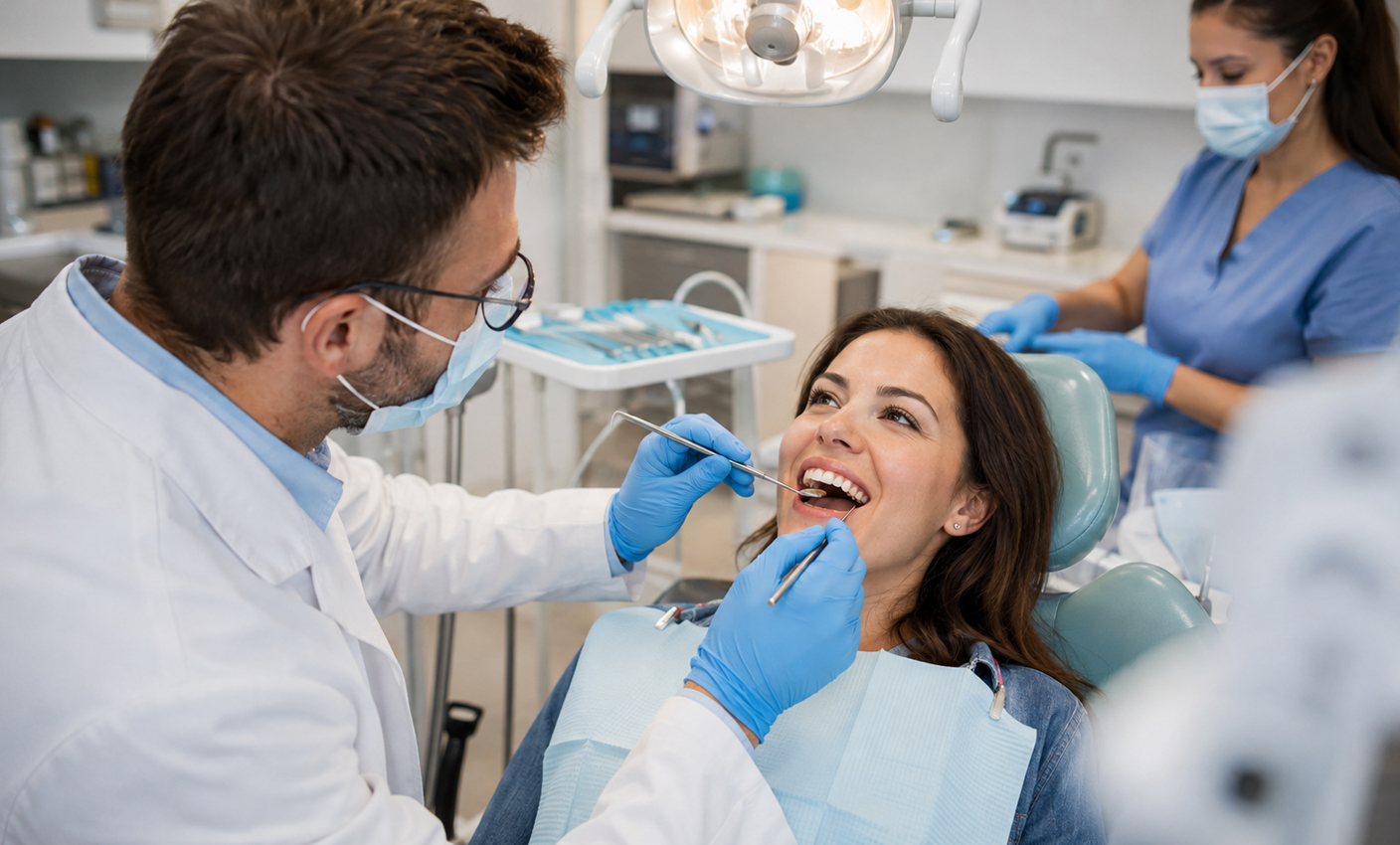
The first visit is an opportunity to discuss what the patient likes and dislikes about their smile. The dentist examines the teeth, gums, and bite and may take photographs, scans, impressions, or X-rays when clinically appropriate.
This planning stage is also the right time to discuss how many teeth may need treatment. Sometimes changing only one tooth can create a mismatch, while treating every visible tooth may be unnecessary. The goal is a balanced plan suited to the individual smile.
2. Treatment planning
The dentist and patient review details such as shade, tooth length, edge shape, symmetry, and material. Digital previews or physical mock-ups may be available in some cases, although a preview cannot guarantee an identical final result.
3. Tooth preparation
If preparation is required, the dentist carefully removes a limited amount of enamel to make room for the veneer. Local anesthetic may be used to support comfort. For laboratory-made veneers, an impression or digital scan is then taken, and temporary veneers may be placed while the final restorations are created.
4. Placement and bonding
Before bonding porcelain veneers, the dentist checks their shape, shade, fit, and relationship with the surrounding teeth. The teeth are cleaned and prepared, and the veneers are attached with dental adhesive and resin cement. The bite is checked and adjusted as needed.
Composite veneers are usually built, shaped, and polished directly on the teeth rather than being fabricated by a laboratory.
5. Follow-up
A follow-up visit allows the dentist to evaluate comfort, bite, gum response, and home care. Some temporary sensitivity or gum tenderness can occur after treatment, but ongoing pain or a bite that feels uneven should be reported promptly.
Benefits and Limitations to Consider
Veneers can provide a coordinated improvement in colour, shape, spacing, and symmetry. Their thin design can also make them more conservative than full crowns when the underlying teeth are healthy and the case is suitable.
However, veneers are not permanent or maintenance-free. Possible complications include chipping, cracking, debonding, changes around the margins, sensitivity, colour mismatch, or the need for future dental treatment. A systematic review of porcelain laminate veneers also identified complications such as fracture, chipping, cracks, debonding, and, less commonly, secondary decay or root canal treatment among the outcomes reported in clinical studies.
Results and longevity vary with the material, enamel available for bonding, bite forces, oral hygiene, diet, habits, and quality of ongoing dental care. No restoration can be guaranteed to last for a specific period.
How Much Do Veneers Cost in Langley?
The cost of veneers in Langley varies from patient to patient. Porcelain and composite do not carry the same fee, and the total investment depends on the number of teeth treated, case complexity, laboratory requirements, preliminary care, and whether old restorations must be replaced.
After an examination and treatment plan, the dental office can provide a written estimate. Patients may also want to ask what is included, such as records, temporary restorations, laboratory fees, follow-up visits, or a protective nightguard.
Because veneers are usually cosmetic, dental insurance may provide limited coverage or none at all. Coverage depends on the individual plan and whether any part of treatment is considered necessary for restoring a damaged tooth. Patients should review their plan or request a predetermination rather than assuming treatment will be covered.
How to Care for Veneers
Veneers still depend on healthy teeth and gums underneath and around them. Daily care remains essential.
- Brush twice daily with a soft-bristled toothbrush and fluoride toothpaste.
- Clean between the teeth every day using floss or another recommended tool.
- Attend regular dental examinations and professional cleanings.
- Avoid using veneered teeth to open packages or bite hard objects.
- Ask about a nightguard if clenching or grinding is a concern.
- Limit habits that can stain composite, including frequent exposure to darkly pigmented drinks or tobacco.
- Contact the dental office if a veneer feels loose, rough, chipped, or uncomfortable.
Good preventive care helps protect both the veneers and the natural tooth structure supporting them.
Frequently Asked Questions About Veneers
Do veneers damage natural teeth?
Veneers do not automatically damage teeth, but many porcelain veneer cases require some permanent enamel removal. Conservative planning and strong enamel bonding are important. A dentist should explain exactly how much preparation is expected before the patient agrees to treatment.
Does getting veneers hurt?
Patient experiences vary. Local anesthetic can be used when teeth require preparation, and the dental team can adjust the visit around comfort needs. Mild sensitivity or gum tenderness may occur afterward. Severe or persistent discomfort is not something a patient should ignore.
Can veneers become stained?
Porcelain generally resists surface staining well, while composite is more likely to discolour over time. Natural teeth around veneers can also change colour, which may eventually create a mismatch. Veneers themselves cannot be whitened in the same way as natural enamel.
Can a veneer be repaired if it chips?
Minor composite damage can often be repaired, depending on its location and extent. A damaged porcelain veneer may sometimes be smoothed or repaired with resin, but replacement may be the more predictable option. The dentist needs to examine both the veneer and the supporting tooth.
Are veneers better than crowns?
Neither option is universally better. Veneers cover mainly the visible front surface and may suit relatively healthy teeth with cosmetic concerns. Crowns surround more of the tooth and may be recommended when substantial structural support is needed. The condition of the tooth should guide the choice.
Can someone get veneers if they grind their teeth?
Possibly, but grinding can increase the risk of chipping, cracking, or debonding. The dentist may recommend addressing the habit, assessing the bite, or using a protective nightguard. Some patients may need a different restorative approach.
Discuss Veneers With a Langley Dentist
Veneers can create natural-looking changes when they are carefully planned around a patient’s oral health, facial features, and long-term needs. The most attractive result is not necessarily the brightest or most perfectly uniform smile—it is one that looks balanced and feels comfortable.
Yorkson Dental provides preventive, restorative, and cosmetic dental services for patients in Langley. Those interested in veneers can arrange a consultation to ask about available cosmetic options and learn which approach may suit their teeth.
Yorkson Dental is located at 20689 Willoughby Town Centre Drive #B130, Langley, BC V2Y 0X7. Patients can contact the practice or call (604) 371-2433 to request an appointment and take the next step toward a smile they feel comfortable sharing.